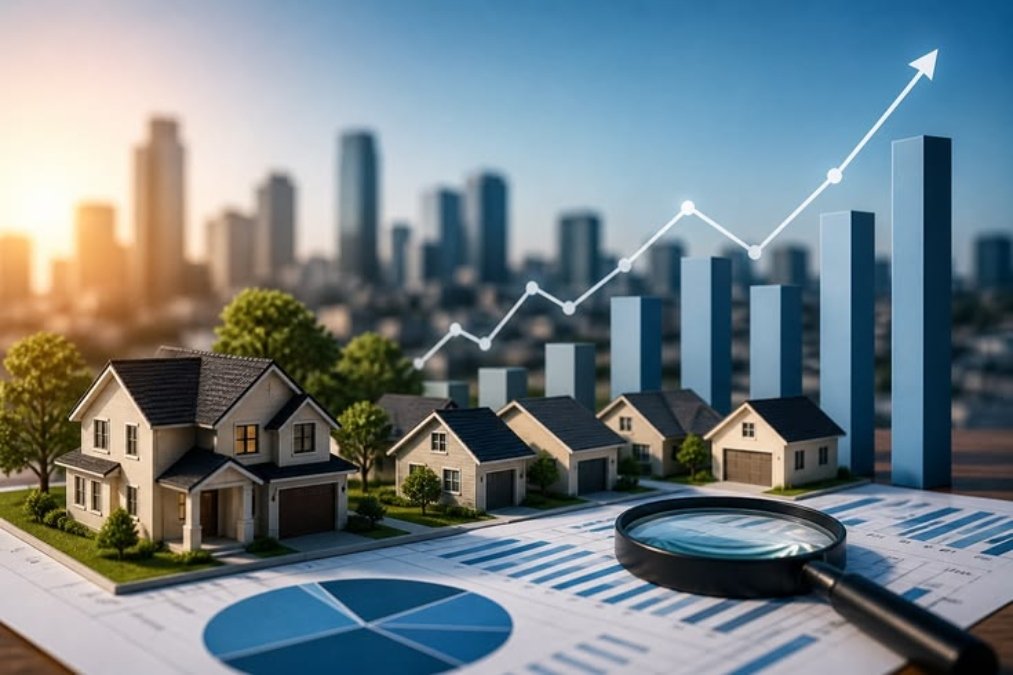

High return property investment is not created by chance. While many investors believe that buying any property can generate profit over time, the reality is that only carefully selected properties deliver strong and consistent returns.
A property may look attractive, have a modern design, or be located in a popular area, but that does not automatically make it profitable. True investment performance depends on rental income, capital appreciation, demand, costs, liquidity, and timing.
For investors, understanding the factors behind a profitable property helps reduce risk, improve ROI, and build a stronger real estate portfolio.
This guide explains what makes a property capable of delivering strong financial performance over the long term.
To explore professional real estate investment opportunities and advisory, visit
Emtedad UAE
.
High Return Property Investment Starts With Location
High return property investment begins with location because location directly influences tenant demand, resale value, rental performance, and long-term appreciation.
A strong location usually offers:
- High tenant demand
- Strong resale potential
- Access to business hubs
- Good transportation links
- Lifestyle amenities
- Future development potential
Properties in high-demand locations are more likely to attract tenants, maintain occupancy, and perform well during different market cycles.
As a result, investors should not choose a property based only on price. They should study whether the location supports both current demand and future growth.
Real Estate ROI Factors Include Rental Yield
Real estate ROI factors should always include rental yield because rental income is one of the main drivers of investment performance.
A property with strong rental yield can generate consistent cash flow and help investors cover expenses such as service charges, maintenance, and financing costs.
When analyzing rental yield, investors should review:
- Average rent in the area
- Tenant demand
- Vacancy rates
- Property management costs
- Service charges
- Expected net rental income
High return property investment decisions should focus on net returns, not only gross rental income. A property may generate high rent, but if operating costs are also high, the actual ROI may be lower than expected.
Capital Appreciation Drives Long-Term Returns
Capital appreciation is another important factor in real estate investment. It refers to the increase in property value over time.
Appreciation can be driven by:
- Infrastructure development
- Population growth
- Economic activity
- Limited supply
- Improved connectivity
- Community development
The best investments often combine rental income with long-term value growth. This creates two layers of return: cash flow during ownership and capital gain when the property is sold.
Therefore, investors should evaluate both income potential and future appreciation before making a purchase.
Profitable Property Investment Depends on Market Fit
Profitable property investment requires choosing the right property type for the right market demand.
Different property types can perform differently depending on investor goals:
- Apartments may offer strong rental demand
- Villas may support long-term appreciation
- Townhouses may attract families and stable tenants
- Commercial units may provide higher yields
- Off-plan properties may offer lower entry prices
High return property investment is strongest when the property type aligns with market demand, tenant expectations, and the investor’s financial objective.
For example, an investor seeking monthly income may prioritize apartments in high-rental areas, while an investor seeking long-term appreciation may prefer villas or properties in emerging communities.
Purchase Price and Entry Timing Matter
Profit in real estate is often influenced by the purchase price. Buying at the right price can significantly improve return potential.
Smart entry timing may include:
- Buying below market value
- Entering early in growth areas
- Avoiding overpriced market peaks
- Negotiating better payment terms
- Comparing similar properties carefully
A good property bought at the wrong price may deliver weak returns. However, a well-priced property in a strong location can create better cash flow, appreciation, and resale flexibility.
This is why professional valuation and market comparison are essential before purchasing.
High Return Property Investment Needs Future Development
High return property investment often benefits from future infrastructure and community development.
Investors should look for areas supported by:
- Upcoming transport projects
- New business districts
- Retail and lifestyle developments
- School and healthcare access
- Urban expansion plans
- Tourism and hospitality growth
Future development can increase demand and support property value growth over time. However, investors should verify whether planned developments are realistic, funded, and likely to improve the area’s attractiveness.
In many cases, stronger returns are found where growth is still developing, not where prices have already reached maturity.
Liquidity and Resale Demand Reduce Risk
Liquidity refers to how easily a property can be sold when the investor decides to exit.
A strong investment property should not only generate income; it should also attract future buyers.
Liquidity indicators include:
- Popular location
- Competitive pricing
- Broad buyer demand
- Practical layout
- Good building quality
- Strong community reputation
Properties with weak resale demand may trap capital and make it difficult for investors to exit at the right time.
Because of this, liquidity should be considered before purchase, not only when selling.
High ROI Real Estate Requires Cost Control
High ROI real estate depends not only on income but also on expenses. Operating costs can reduce net returns and affect overall investment performance.
Common costs include:
- Maintenance costs
- Service charges
- Property management fees
- Insurance
- Repairs and upgrades
- Vacancy periods
Lower costs can improve net returns, while uncontrolled expenses can reduce profitability even when rental income appears strong.
Before purchasing, investors should calculate realistic annual costs and compare them with expected income.
Market Timing and Economic Conditions Influence ROI
Market timing can affect both purchase value and future profitability.
Important timing factors include:
- Real estate market cycles
- Interest rates
- Economic growth
- Supply and demand balance
- Investor sentiment
- Rental market performance
High return property investment requires understanding whether the market is growing, stabilizing, or becoming overheated.
Investors do not need to predict every movement perfectly. However, they should avoid emotional decisions and rely on data, valuation, and long-term strategy.
Property Investment Tips for Tenant Quality
Property investment tips should always include tenant quality because reliable tenants protect income stability.
High-quality tenants usually:
- Pay rent on time
- Stay longer
- Maintain the property better
- Reduce vacancy periods
- Support predictable cash flow
Properties that attract stable tenants often have practical layouts, good locations, quality facilities, and access to daily amenities.
For long-term investors, tenant stability can be just as important as rental price.
Data-Driven Analysis Improves Investment Decisions
Modern investors should rely on data before choosing a property. A strong investment decision should be based on clear numbers, market evidence, and risk analysis.
Important data points include:
- Rental yield
- Comparable sale prices
- Occupancy rates
- Future supply
- Service charges
- Developer or building reputation
By using data, investors can avoid speculation and focus on properties with stronger fundamentals.
This makes high return property investment more strategic, measurable, and less dependent on guesswork.
Industry Insights and External Resources
For official real estate market information and regulatory updates, investors can visit
Dubai Land Department
.
For broader real estate investment education, resources from
Forbes Advisor
explain key investment principles, risk considerations, and long-term planning strategies.
Frequently Asked Questions (FAQ)
-
What makes a property a high-return investment?
A high-return property usually combines strong location, rental yield, appreciation potential, tenant demand, reasonable costs, and strong resale value. -
What is considered a good ROI in real estate?
A good ROI depends on the market, but many investors consider a rental yield of around 5% to 8% attractive in strong property markets. -
Is rental income or appreciation more important?
Both are important. Rental income supports cash flow, while appreciation builds long-term wealth through increasing property value. -
How can I identify a profitable property investment?
You can identify a profitable property by analyzing location, rental demand, purchase price, costs, future development, and resale demand. -
Does property type affect investment returns?
Yes. Apartments, villas, townhouses, commercial units, and off-plan properties can produce different levels of income, appreciation, and risk.
High return property investment is not about choosing a property randomly. It is about selecting an asset based on location, rental income, appreciation potential, timing, costs, tenant demand, and market data.
Successful investors focus on both income and long-term value. They also understand that a good investment must fit their goals, risk tolerance, and portfolio strategy.
Real estate success is not only about buying property. It is about buying the right property with the right strategy.
👉 At Emtedad UAE, we help investors evaluate property opportunities with market insight, ROI analysis, and professional guidance.
📩 Contact our team today and discover high-return real estate opportunities aligned with your investment goals.